Impact of Europe Quantitative Easing
Published / Last Updated on 21/01/2015
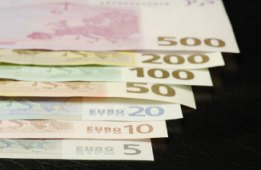
Impact of Europe Quantitative Easing.
What is quantitative easing (QE)?
Quantitative easing is the printing of money to buy back central bank (a country’s state debt) from its creditor. In plain English. British borrows money to fund benefits, schools, roads etc if it is not receiving enough income in taxes (the so-called National Debt or Public Sector Borrowing Requirement). This debt is issued in the form of Gilts (in countries the same debt is called Government Bonds). The Gilt or Bond is just like a “share” in Britain PLC. It is a promise by the Government to pay interest on the money that it owes via either fixed interest rate or inflation linked interest rate. It has a maturity date when that debt must be repaid. Who does the Government borrow from? Banks, Investment Funds and Pension Funds mainly. If the Government borrowed money a few years ago, interest rates were higher. So it deploys QE – it buys back i.e. pays off its debts from a few years ago by printing money. This releases millions and billions back into the economy to stimulate growth making greater amounts of cash available in the economy. Via the back door, it may have to borrow again today – but interest rates are much lower today.
Who has used QE?
USA, UK and Japan. The USA has bought back debt via quantitative easing , i.e. technically injected in their economy, $3.5 trillion (roughly £2.2 billion). Japan has injected around £1.1 trillion in their economy and the UK has injected some £375 billion. We can see that some success has been seen in both the US and the UK by stimulating the economy but Japan has been trying UK for around 15 years and has spent some it still will a ‘flat lining’ economy.
Did QE Work?
The jury is out! We are not sure but many are worried that long term, super inflation will follows as the billions and trillions of pounds and dollars must reappear somewhere in the economy and ultimate drive up inflation as money supply grows.
What of Europe and QE?
Europe has been walking a tightrope with virtually no growth i.e. no inflation and bordering on the disaster that is negative inflation i.e. deflation. Why is deflation bad we hear you ask? Because if prices are falling i.e. you can buy a loaf of bread or a television or a car cheaper next week than you can this week then you will put off spending your money, slowing the economy even further, before you know it the economy moves into shut down as nobody is spending, everybody is saving and waiting and waiting for prices to fall even further before spending.
This is what Europe is bordering on at the moment, and will oil prices falling, even UK inflation is falling to dangerous levels. The EU has always said it would not “print money” and stimulate economies with QE. Germany is set against it with its huge concerns for printing too much money and then suffering inflation and indeed hyper-inflation (with prices spiralling out of control) which it did after World War One in the 1920’s suffering terrible price rises and starvation which ultimately led to the rise of the Nazis in the 1930’s.
That said, the European Central Bank looks set to announce QE this week, which could be around the level that the UK did at £375bn (€0.5bn). This is what has driven stock markets back into recovery such as the UK, whose biggest trading partner is Europe, but it has also weakened the Euro against both the £ and the $.
We fear for stock market confidence if the ECB does not confirm that it is to stimulate the EU with quantitative easing. QE will boost markets and weaken the EURO, no QE will drag markets down.