Triple Lock State Pension To Go
Published / Last Updated on 07/11/2016
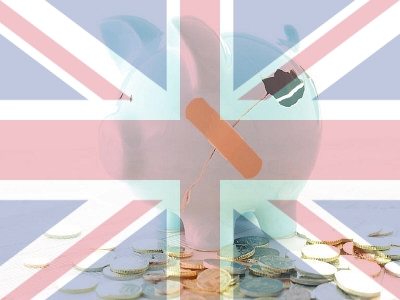
Triple Lock State Pension To Go.
On Friday the House of Commons Work & Pensions Select Committee published its third review on "Intergenerational Fairness". Read DWP Intergenerational Fairness Report.
What is Intergenerational Fairness?
State benefits are "pay as you go" unfunded schemes. What this means is the workers of today pay for the benefits of today. Your national insurance contributions and tax today are paid out roughly in 6 weeks to the pensioners of today, plus of course other benefits, NHS etc. This is known as a social contract between generations. You are paying for pensioners today and our offspring will pay for our state pensions et al. Workers of today expect similar proportional benefits in retirement to what our parents had.
What is the problem? Workers expect to be poorer
In the 2016 results from Fragmented Times –Generational Strains Report, for those:
- Born 1966 - 1979 (So called Generation X births) A large number of people thought their parents are better off in retirement than they will be in retirement. 51% believe this, which is a huge increase from 2013 when 24% thought parents better off.
- Born 1980 - 2000 (So called Generation Y Millenniums) An even greater number of people thought their parents will be better off in retirement than they will be in retirement. 58% believe this, which is a huge increase from 2013 when 40% thought parents would be better off.
Why Poorer? Ageing population, Baby Boom over, the Economy is skewed to pensioners
The baby boom years of 1945-65 saw an average birth rate per year of between 800,000 to 1,000,000. From 1966 onwards the birth rate has been 700,000 and 800,000.
In short, there are not enough workers paying taxes and national insurance to pay for the huge, ageing population and there will be less in the future.
Way back in post war Britain, when State Pensions came of age and the NHS was born, the average life expectancy was between 65 -70. The State did not expect to pay out pensions and healthcare treatment beyond then. Nowadays, life expectancy is between 84-89. People are living around 19 years longer than was planned for, so there is a huge strain on the NHS and a huge strain on workers paying for this and ever greater numbers of surviving pensioners with State Pension Rights.
In the future, if the birth rate continues to be lower, there will be even less people around to pay for Generation X or Generation Ys state pensions, NHS medical care let alone social care in care homes. The children of today also do not have the same opportunities to acquire wealth via cheaper property, easier to secure mortgages and “gold plated” Defined Benefit/Final Salary schemes.
Probable Changes to State Pension Triple Lock
The ‘triple lock’ from 2010 Budget started in 2012 and protects basic state pension yearly increases by the higher of :
- price inflation, measured by the Consumer Price Index (CPI);
- average earnings growth; or
- 2.5 per cent.
The Intergenerational Fairness report suggests that it is unfair to burden existing workers with paying for the triple lock state pension for the pensioners of today when future generations are unlikely to have the same.
Comment
The costs of state benefits are huge. Older generations simply have not paid enough in social security contributions to justify the size of their state pension. That said, they paid in good faith to the social contract between generations.
The ageing population is an issue that successive governments have ignored. It is simply a system that does not work. That said, many younger people may inherit wealth from their parents.
Whilst we believe that the triple lock will go, we also believe the ageing population is everyday becoming a large ‘political animal’ that must be tamed. In the 2011 census, 1 in 4 adults were over age 65, by the next census in 2021 it could be 1 in 3.
Think about that: 33% of the voting population retired. Pensioners will become a political power that forces governments to offer better state pensions and old age care packages at the expense of the younger generation. Will the younger generation be forced to pay more taxes?
Intergenerational Fairness is going to be tough nut to crack.