Global Markets Rally and Oil Falls Below $100 as Trump Signals Possible End to Iran War
Published / Last Updated on 01/04/2026
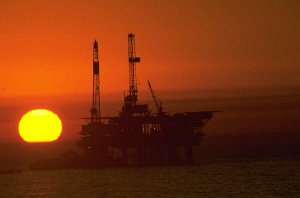
Oil prices slid sharply on Wednesday after President Donald Trump said the United States could pull out of the conflict with Iran within “two to three weeks,” easing fears of a prolonged disruption to global energy supplies. The comments triggered an immediate reaction across financial markets, sending crude lower and lifting stocks from Asia to Europe.
Oil retreats from multi‑year highs
Brent crude briefly dipped below $100 a barrel in early Asian trading, falling as much as 4% to around $99.81. US benchmark West Texas Intermediate dropped to roughly $97.63.
The pullback comes after a dramatic surge in March, when Brent jumped more than 60%—its biggest monthly gain since the 1990 Gulf crisis—amid fears that fighting in the Middle East could choke off shipments through the Strait of Hormuz, one of the world’s most important oil routes.
Trump’s latest remarks suggested the US may withdraw regardless of whether Iran agrees to a deal. A report in the Wall Street Journal said he was prepared to end the military campaign even if the Strait remains largely closed.
Gold climbs as investors hedge bets
Despite the softer tone from Washington, gold prices rose for a fourth straight day as investors continued to seek safety. Analysts say the metal is benefiting from ongoing uncertainty and volatile energy markets.
Global stocks surge on hopes of de‑escalation
European markets opened sharply higher, extending gains seen in the US overnight.
- FTSE 100: +1.64%
- FTSE 250: +1.98%
- Germany’s DAX: +1.94%
- France’s CAC 40: +1.5%
In the US, the Dow Jones closed 2.49% higher on Tuesday, while the S&P 500 jumped nearly 3%.
Asian markets also rallied strongly. Japan’s Nikkei 225 surged 5.2%, and South Korea’s Kospi soared 8.4%, offering relief to economies heavily reliant on Middle Eastern energy imports.
Tanker hit by missile as tensions persist
Despite the market optimism, the conflict continues. QatarEnergy confirmed that a fuel‑oil tanker it had leased was struck by a missile early Wednesday. No crew members were injured, and authorities said there was no environmental damage.
Qatar’s Ministry of Defence reported that Iran fired three cruise missiles—two were intercepted, while one hit the vessel.
Meanwhile, Israel carried out airstrikes in Beirut, saying it was targeting senior Hezbollah figures.
Signals from Washington and Tehran
Speaking from the Oval Office, Trump said Iran was “begging to make a deal,” but insisted that whether an agreement is reached is “irrelevant” to America’s withdrawal timeline.
Iranian President Masoud Pezeshkian said Tehran was ready to end the war but demanded guarantees to prevent future attacks.
The White House said Trump will deliver an “important update on Iran” overnight tonight at 02:00 BST (01:00 GMT) on Thursday.
Comment: What This Means for Fuel Prices
1. Short‑term relief at the pump is possible
- Falling crude prices typically feed into petrol and diesel costs with a 2–4 week lag.
- If Brent stays below $100, UK fuel prices could stabilise or edge lower after a month of steep increases.
2. Volatility remains high
- Any renewed escalation—especially involving the Strait of Hormuz—could send prices sharply higher again.
- Clients should expect swings rather than a straight-line decline.
3. Jet fuel and diesel remain tight
- Refiners are bidding aggressively for crude due to shortages in jet fuel and diesel.
- This may keep aviation and freight costs elevated, even if headline oil prices ease.
What This Means for Investments
Equities
- Energy stocks may see profit‑taking after a strong March, but remain supported by tight supply.
- Travel, airlines, and consumer sectors benefit from lower oil and improved sentiment.
- Asian markets (Japan, South Korea) are particularly sensitive to energy costs and have rallied strongly.
Bonds
- Lower oil prices reduce inflation pressure, which can support government bonds.
- However, geopolitical uncertainty keeps safe‑haven demand elevated.
Commodities
- Gold continues to rise as a hedge against geopolitical risk.
- Oil is likely to remain volatile until there is clarity on:
- US withdrawal timing
- Iran’s response
- Security of shipping routes
Currencies
- The pound strengthened alongside global risk appetite.
- Commodity‑linked currencies (CAD, NOK) may soften if oil continues to retreat.